
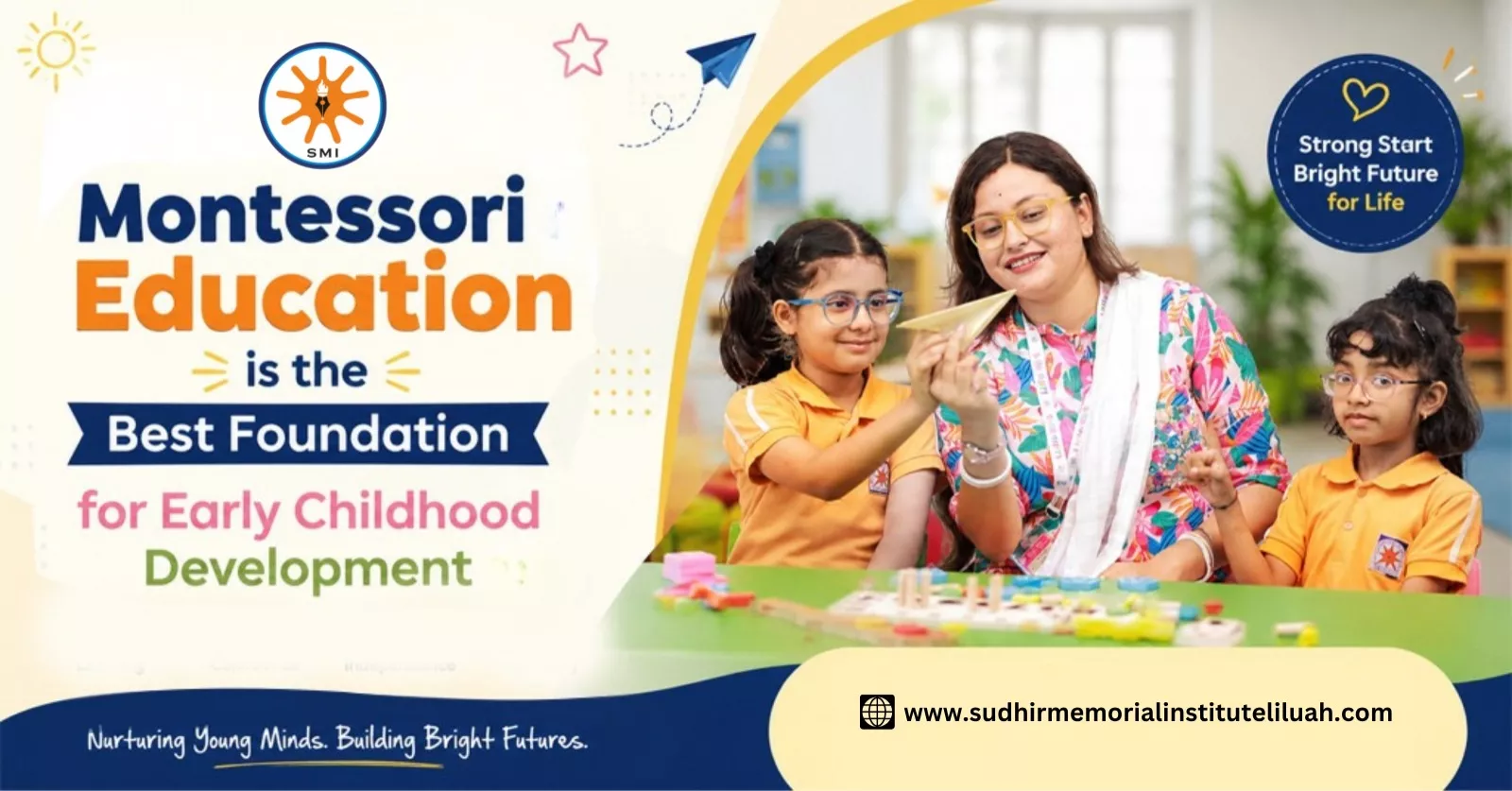
Choosing the right educational base for a child is usually one of the most heavy decisions parents make. Early childhood is a big turning point of development, and the learning setting during these years can nudge a child’s future success. The Montessori education pattern has become known worldwide for its child centered style, and it helps little learners build independence, some real creativity, and confidence from a very early age. At Sudhir Memorial Institute Liluah, children get a caring, lively environment that pushes overall growth, and even lifelong learning.
Understanding the Montessori Education Pattern
Montessori is an educational approach made by Dr. Maria Montessori. The core idea is learning by doing, self guided tasks, and friendly cooperative play. Unlike the usual classroom setup, Montessori classrooms let children work at their own pace, while they explore concepts with practical experiences, not just talk and chalk.
This setup helps children grow into critical thinking, problem solving, and self belief. The Montessori room is planned in a special way, to match the natural curiosity of young learners, and to encourage them to become active people in their own education.
Building Independence and Confidence from an Early Age
One of the biggest wins from Montessori education is independence. We have found with children that if they are allowed to be responsible for selecting activities, organizing and completing their tasks, the responsibility and self-discipline is subtly taught even when they are very young.
At Sudhir Memorial Institute, Liluah, the Montessori curriculum is shaped to help children grow confidence in what they can do. When children complete tasks, and solve problems without constant help, they feel achievement, and that feeling pulls them to explore more.
The Encouragement of creativity and critical thinking
Montessori education promotes creativity because children use a concrete, hands-on way to experiment with concepts and do not simply memorize them. Students use specially designed learning materials that invite them to observe, test, and discover.
And in this process critical thinking shows up naturally. Instead of getting information like a speech, they start analyzing situations, asking questions, and working out solutions on their own.
Those skills matter a lot in a world that change quickly, where creativity and problem solving are considered extremely valuable. Montessori tends to set up the base for lifelong learning, and intellectual curiosity.
Personalized Learning for Every Child
Every child is different, and Montessori recognizes that clearly. The curriculum is flexible, and it adjusts to each child’s learning speed, as well as their interests, no need to force everyone into the same box.
Teachers here are more like guides, not those traditional instructors who just direct everything. They watch students closely, and step in only when support is needed. Because of that, children stay interested, and they also keep a genuine motivation to learn.
Parents searching for school admission in Howrah increasingly like this personalized model, because it helps children do well academically and emotionally, without unnecessary pressure.
Social & Emotional Development
Since Montessori classes often combine a range of ages, children work and play side by side in the same classroom. Mixed age groups foster a natural environment of cooperation, caring, and respect: not "say what you should feel and feel what you said"-real feeling.
Younger children often learn by observing older students, and older children grow leadership skills by helping younger peers. In the end you get a supportive mini community where students learn social values along with academic concepts.
At Sudhir Memorial Institute, Liluah, the focus goes beyond books, with special attention to character building, communication strengths, and emotional well being. These qualities strongly shape a child’s overall development, and later success.
A Strong Foundation for Future Academic Excellence
The Montessori education pattern supports focus, discipline, and a positive mindset toward learning. With these traits, a child gets a solid academic foundation that helps them during their whole education journey.
In the list of Best CBSE School in Howrah, Sudhir memorial institute, Liluah offers education for not only marks but also personality, confidence and leader habits. Moving from Montessori to high school will become easier for the child as their organizational habits, motivational tendency and learning habits would already be present.
What to choose Sudhir Memorial Institute, Liluah?
Sudhir memorial institute, Liluah is striving to present quality education with a blend of traditional and modern techniques with a friendly and cherishing atmosphere. With the Montessori program young learners are enabled to learn through experiences, creativity and an overall development of personality. The dedicated teachers, readiness of the classrooms and an effective system of values offer a child the right kind of school to begin the educational path with.
Parents looking for admission open for Montessori in Howrah can choose a learning system that supports both academic excellence and personal development, side by side, not one after another.
Conclusion
The Montessori education method, really, gives a unique and rather effective way of supporting early childhood learning. It encourages independence and also creativity, even critical thinking, plus social development, so children can form a solid base for future progress.
For parents who are thinking about school admission in Howrah, Sudhir Memorial Institute in Liluah offers a very good Montessori atmosphere that supports overall growth.
FAQs
1. What is Montessori education?
Montessori education is a child-centered learning approach that encourages independence, creativity, and hands-on learning through specially designed activities and environments.
2. Why is Montessori education important for early childhood development?
Montessori education helps children develop cognitive, social, emotional, and motor skills during their most formative years, creating a strong foundation for future learning.
3. How does Montessori education promote independence?
Children are encouraged to make choices, complete tasks on their own, and take responsibility for their learning, which builds confidence and self-reliance.
4. What skills do children develop in a Montessori classroom?
Children develop problem-solving abilities, communication skills, concentration, critical thinking, creativity, and social interaction skills.
5. Is Montessori education suitable for all children?
Yes, Montessori education is designed to accommodate different learning styles and paces, helping every child reach their full potential.
6. How does Montessori learning differ from traditional education?
Unlike traditional methods, Montessori education focuses on hands-on experiences, self-directed learning, and individualized instruction rather than teacher-led lessons.
7. At what age can a child start Montessori education?
Children can typically begin Montessori education from around 2.5 to 3 years of age, depending on the school's admission criteria.
8. Why choose Sudhir Memorial Institute Liluah for Montessori education?
Sudhir Memorial Institute Liluah provides a nurturing learning environment, experienced educators, modern facilities, and a child-focused approach that supports holistic development from an early age.